We've sent you an email with a link to update your password.
Reset your password
We will send you an email to reset your password.
Chaga Mushroom and Skin Health: Emerging Research on Eczema & Psoriasis
Joshua Zimmerman
0 comments
Chaga Mushroom and Skin Health
Quick Summary: Chaga Mushroom for Eczema & Psoriasis
The Root Causes: Eczema (atopic dermatitis) and psoriasis are chronic inflammatory conditions driven by immune dysregulation (such as Th2 or Th1/Th17 imbalances), systemic oxidative stress, and a compromised skin barrier.
How Chaga Targets Skin Disease: Chaga mushroom (Inonotus obliquus) contains potent bioactive metabolites that address these root causes from the inside out:
Anti-Inflammatory & Immune Support: Chaga extracts are shown to significantly reduce pro-inflammatory cytokines (like IL-6 and TNF-α) while modulating the mast cell and IgE pathways that trigger allergic eczema flare-ups.
Gut-Skin Axis: Chaga polysaccharides nourish beneficial gut bacteria, which plays a crucial role in regulating systemic immune responses and cutaneous (skin) health.
Barrier Protection: Compounds like triterpenoids and melanin protect keratinocytes from oxidative damage, supporting collagen and hyaluronic acid pathways to reduce itch and transepidermal water loss.
The Best Formulation for Skin Health: To effectively capture these skin-supporting metabolites, opt for a wild-harvested, full-spectrum 72-hour Chaga concentrate. Extended water extraction is necessary to maximize the yield of beta-glucans, inotodiol, and fungal melanin compared to basic powders or teas.
Emerging Research on Eczema and Psoriasis:
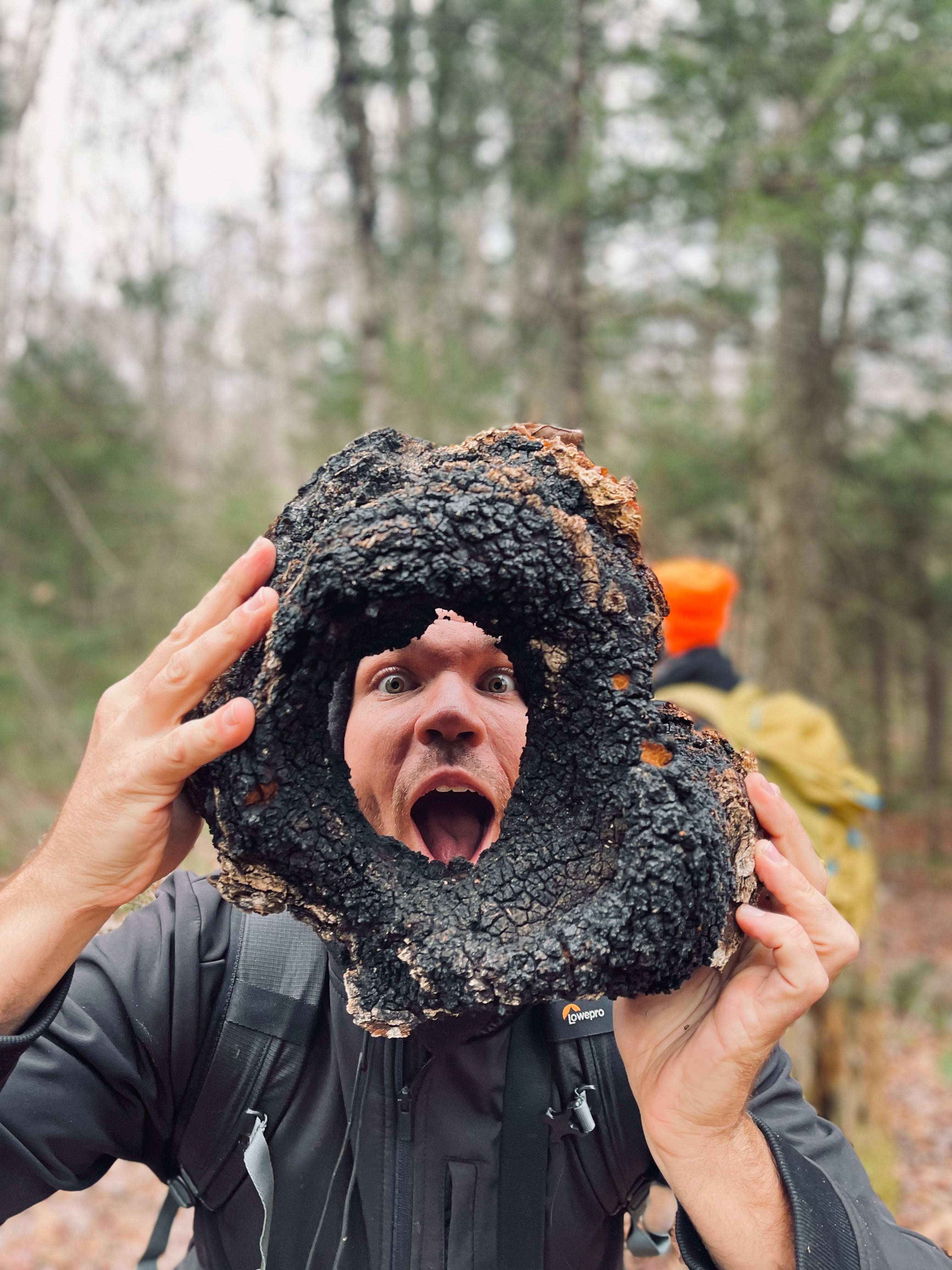
For centuries, the black conk of the Chaga mushroom has been used in traditional medicine to support overall health. Now, modern science is increasingly investigating how Chaga’s powerful compounds may support skin conditions like eczema and psoriasis — two of the most common inflammatory skin disorders that affect millions. Below, we dive into the research on Chaga’s anti-inflammatory, immune-modulating, and skin-barrier supporting metabolites, what they mean for skin wellness, and how to choose a high-quality Chaga product that delivers.
Check out the video we made about Chaga and eczema using research backed scientific literature:
1. What Are Eczema & Psoriasis?
Eczema (atopic dermatitis) and psoriasis are chronic, inflammatory skin conditions characterized by red, itchy, scaly patches and disrupted skin barrier function.
Eczema involves a Th2-dominated immune response, high IgE levels, mast cell activation, and skin barrier defects.
Psoriasis is often a Th1/Th17-dominant condition, marked by hyperproliferation of skin cells, immune dysregulation, and systemic inflammation. Because both conditions share underlying inflammation, oxidative stress, immune dysregulation, and skin-barrier damage, ingredients that target those mechanisms may offer meaningful support.
2. How Chaga Mushroom Works on Skin (Key Mechanisms)
Here are the major ways Chaga mushroom’s bioactive compounds may support skin health in eczema and psoriasis:
📌 Anti-Inflammatory & Immunomodulatory Effects
Research shows that extracts of Chaga significantly reduce pro-inflammatory cytokines such as IL-6, TNF-α, and IL-1β in cell and animal models. PMC+2PMC+2 Since both eczema and psoriasis are driven by immune-mediated inflammation, this suggests Chaga may help calm skin flare-ups and reduce irritation.
📌 Immune Balance & Mast-Cell / IgE Support
While direct human trials in skin disease are limited, literature reports suggest Chaga extracts can modulate immune responses and regulate mast cell / IgE pathways — highly relevant for allergic-type eczema. PMC+1
📌 Skin Barrier & Cellular Protection
Chaga contains compounds that support antioxidant defenses, reduce oxidative damage, and help protect skin cells. In keratinocytes, for example, Chaga triterpenoids lowered inflammatory mRNA expression of IL-1β, IL-6 and supported collagen/hyaluronic acid-related genes. PMC+1 A healthier barrier may reduce transepidermal water loss, itching and susceptibility to flare-ups.
📌 Gut-Skin Axis & Microbiome Support
Recent research indicates Chaga polysaccharides may influence gut microbiota composition, which in turn can modulate systemic and cutaneous immune responses (gut-skin axis). PMC Since gut dysbiosis is implicated in both eczema and psoriasis, this is a promising mechanism.
3. What the Research Specifically Says for Eczema & Psoriasis
While direct clinical trials using Chaga for eczema or psoriasis are extremely limited, several reviews and pre-clinical studies provide relevant insights:
A review noted that Chaga polysaccharide extracts may be “useful for preparing drug for treating atopic dermatitis (eczema), food allergy, allergic rhinitis or asthma.” PMC
Some anecdotal/historical sources reference a Russian study on Chaga in psoriasis patients (reporting high improvement rates) but this has not been replicated in peer-reviewed literature. Herbal Reality
In vitro studies show Chaga’s triterpenoids (e.g., inotodiol) reduce expression of inflammatory genes in keratinocyte cells, a model relevant to skin disorders. PMC
Anti-inflammatory cell studies show Chaga extracts reduce NO production, cytokine release in stimulated macrophage models, illustrating the foundational anti-inflammatory activity. PMC+1
In short: the mechanistic groundwork is very strong for Chaga’s potential in inflammatory skin disease.
4. Why This Matters for You & Skin Wellness
Because both eczema and psoriasis involve chronic inflammation, oxidative stress, immune dysregulation, and barrier compromise, the shared mechanisms targeted by Chaga mushroom offer a compelling adjunctive strategy for skin health. Whether you’re looking to:
Reduce flare-ups and soothing skin irritation
Support skin recovery and calm post-treatment irritation
Strengthen your skin barrier and reduce itch
Address underlying immune imbalance rather than just surface symptoms — Chaga can play a meaningful role in your skin-health toolkit.
5. Choosing a High-Quality Chaga Product
To get meaningful results for skin health, here’s what to look for:
Full-spectrum extract: One that captures polysaccharides, triterpenoids, melanin and other metabolites.
Optimized extraction time: Products that use extended extraction (e.g., 72-hour water extraction) to maximize active compound yield.
Standardized content: Look for beta-glucan %, triterpenoid content (inotodiol etc.), and melanin assays.
Transparent sourcing & COA: Wild-harvested on birch trees (not just mycelium), third-party tested for heavy metals and potency.
Brand you trust: Choose products with clear documentation and transparency.
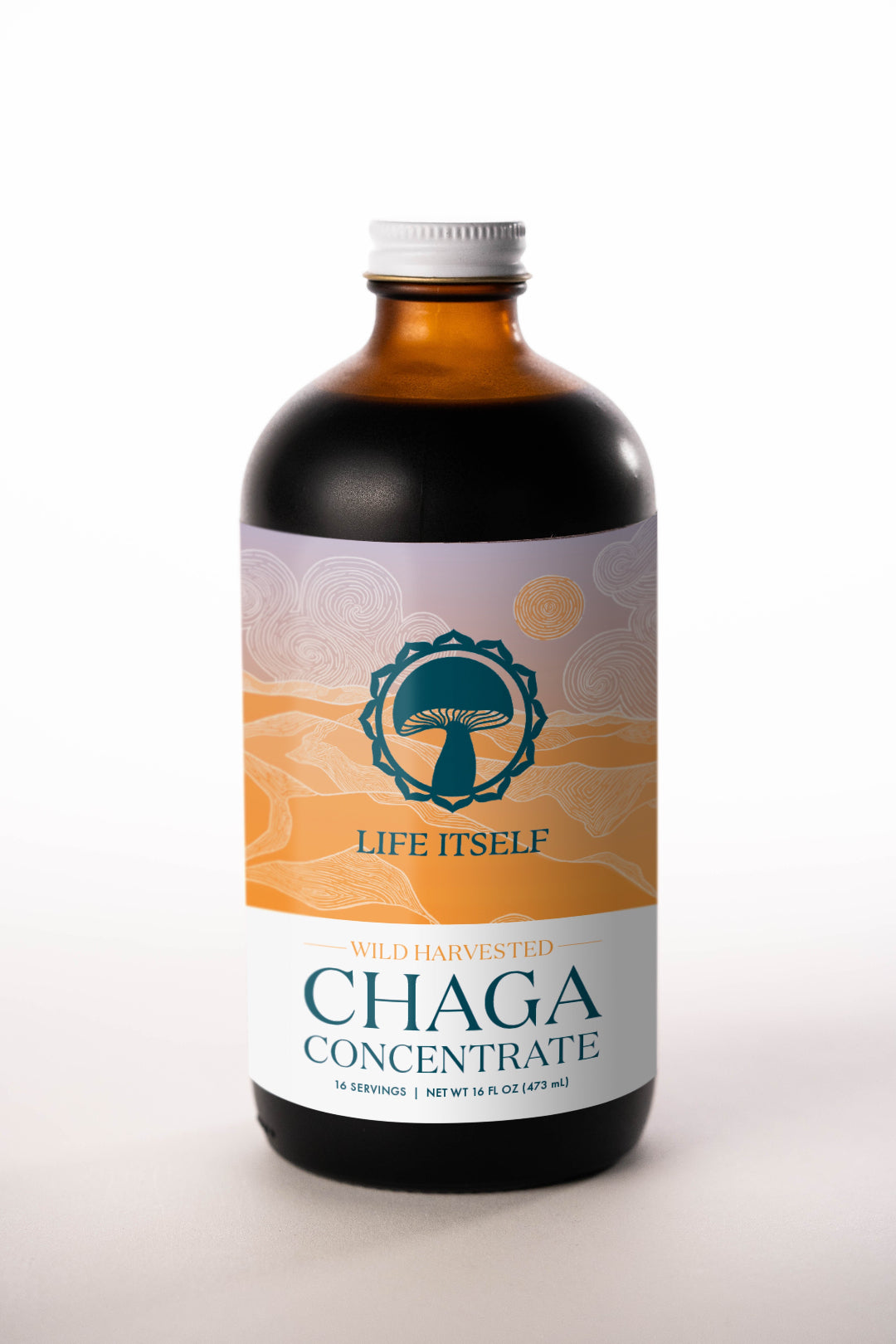
Consider our 72-Hour Chaga Concentrate — a full-spectrum Chaga extract specifically optimized for skin and immune support.
6. Practical Usage & Integrating Into Skin Care Routine
Take our Chaga Concentrate daily (follow label instructions) as part of your skin health regimen.
Pair with other skin-supportive habits: gentle skincare, hydration, balanced diet, stress-management.
Track your skin health: note flare-ups, itch severity, skin texture changes over 8–12 weeks.
Maintain consistent use — because immune and barrier changes take time.
Conclusion
While more clinical trials are needed, the science is clear: Chaga mushroom offers a suite of biologically-active compounds that target the root drivers of eczema and psoriasis — inflammation, immune dysregulation, oxidative stress, and barrier integrity. With the right extract, Chaga can be a powerful adjunctive ally for clearer, calmer skin.
Disclaimer: These statements are not evaluated by the FDA. Chaga is not a cure for eczema or psoriasis. Please consult your physician before using any supplement.