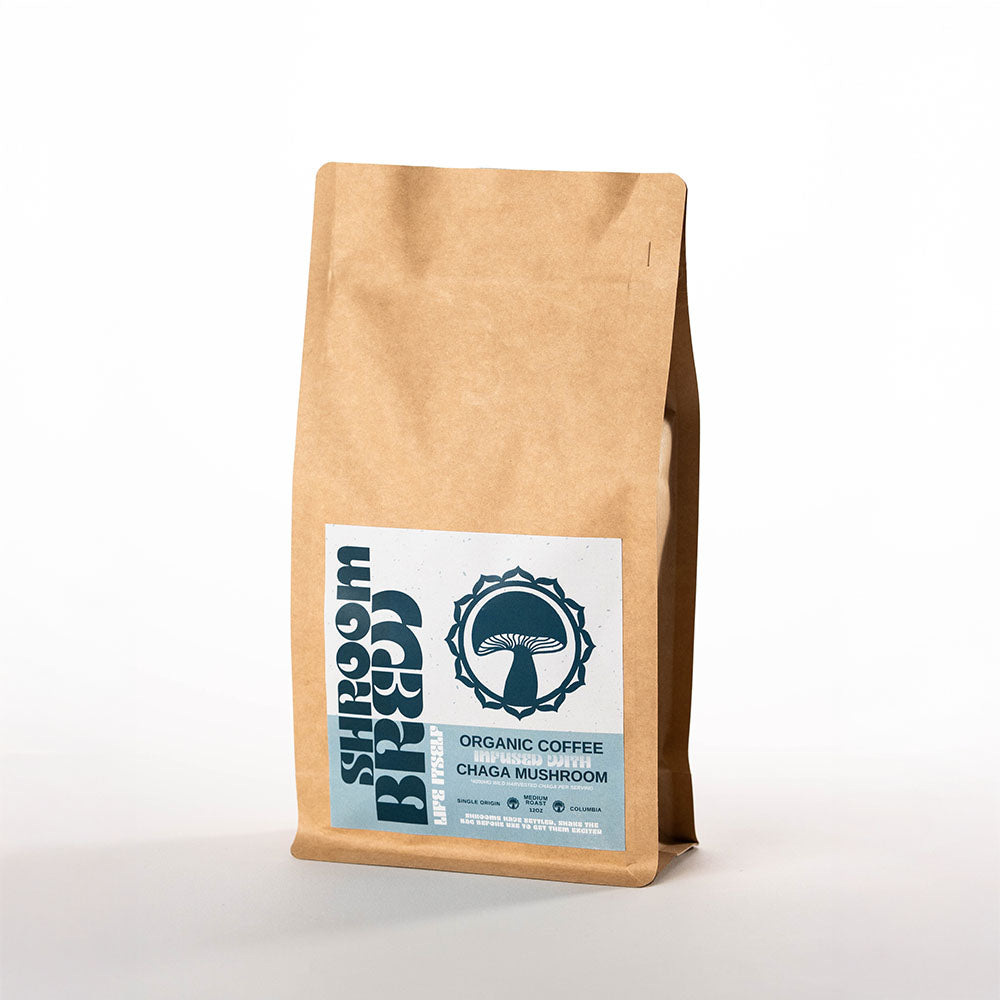
We always knew our Chaga was special, but earning consumer trust requires scientific transparency. After completing our 3-phase grinding process, we sent our extra finely ground, wild-harvested Chaga to a third-party lab for a full Phytonutrient Mass Spectrometry analysis.
The results were remarkable: 35x higher levels of mineral drivers than standard extracts, and the identification of rare compounds like Alpha-GPC alongside thousands of compounds not yet catalogued in scientific literature. This data gives us a much clearer picture of Chaga's complex bioactive profile.
Most people associate Chaga with generic "immune support" — but the compound diversity revealed by this analysis tells a far richer story. Below we've outlined 10 of the most concentrated compounds identified in Life Itself's wild-harvested Chaga, along with what published research says about each one.
Note: The compound information below is provided for educational purposes only and reflects general scientific literature, not claims about our specific product. These statements have not been evaluated by the FDA.
These compounds are associated in research with antioxidant activity, skin barrier support, and protection against oxidative stress.
Phytoceramide
At a Glance: A lipid compound studied for its role in supporting skin barrier structure and hydration.

Skin Barrier Research
Ceramides are naturally occurring lipids in the skin. Research suggests phytoceramides may help support the skin's moisture barrier, which can decline with age or environmental exposure.
Lipophilic Properties
Highly fat-soluble, phytoceramides are studied for their ability to integrate into lipid-rich skin layers, potentially supporting structural integrity from within.
Pentahydroxydihydrochalcone
At a Glance: A polyphenol studied for antioxidant and free radical scavenging properties.

Antioxidant Activity
Five hydroxyl groups give this compound strong free radical scavenging potential in laboratory studies, making it a subject of interest in oxidative stress research.
Mitochondrial Research
Preliminary research has explored this compound's interaction with mitochondrial membranes and its potential role in supporting cellular energy efficiency.
Coniferyl Aldehyde
At a Glance: A phenylpropanoid compound found in many plants, studied for antioxidant and anti-inflammatory properties.

Radioprotective Research
Some studies have explored coniferyl aldehyde's potential to support cellular resilience against oxidative damage from environmental stressors.
Vascular Research
Research has examined this compound's potential role in supporting endothelial function and healthy circulation, though human clinical data remains limited.
These compounds are associated in research with cognitive function, focus, and neural health. They are among the most studied nootropic compounds in the scientific literature.
Alpha-GPC
At a Glance: A choline-containing compound widely studied for its role in cognitive performance and focus.

Choline Precursor
Alpha-GPC is a precursor to acetylcholine, a neurotransmitter involved in memory and learning. It is one of the most researched nootropic compounds available.
Athletic Performance Research
Studies have explored Alpha-GPC's potential to support the mind-muscle connection and power output in athletic contexts.
2-Hydroxy Lignoceric Acid
At a Glance: A hydroxylated fatty acid that is a key structural component of myelin, the insulating sheath around nerve fibers.

Myelin Structural Component
This fatty acid is a naturally occurring building block of myelin sheaths. Research has examined its role in maintaining the structural integrity of neural insulation.
Neuroprotective Research
Preliminary studies have explored hydroxylated fatty acids like this one for their potential role in supporting neural membrane stability against oxidative stress.
These compounds are associated in research with cellular energy production, muscle recovery, and metabolic efficiency.
L-Valine
At a Glance: A branched-chain amino acid (BCAA) essential for muscle metabolism and energy regulation.

Muscle Metabolism
As one of the three BCAAs, L-Valine plays a role in muscle protein synthesis and may help support nitrogen balance during periods of physical exertion.
Glycogen Support
Research suggests L-Valine may support glycogen synthesis in muscle tissue, contributing to sustained energy availability during exercise.
Succinate (Succinic Acid)
At a Glance: A key intermediate in the Krebs cycle, central to cellular energy (ATP) production.

Krebs Cycle Intermediate
Succinate is a naturally occurring compound in the mitochondrial energy cycle. It plays a direct role in ATP synthesis, the primary energy currency of cells.
Metabolic Research
Research has explored succinate's role in supporting mitochondrial efficiency and its potential as a marker of metabolic health.
Erucamide
At a Glance: A fatty acid amide studied for its potential role in nervous system signaling and relaxation.

Nervous System Signaling
Erucamide belongs to a class of fatty acid amides that interact with the endocannabinoid system. Research has explored its potential role in supporting a calm, balanced state.
Sleep Research
Some studies have examined fatty acid amides like erucamide for their potential to support healthy sleep patterns and relaxation.
These compounds are studied for their roles in nutrient absorption, antioxidant defense, and cellular protection.
Botcinolide
At a Glance: A fungal polyketide compound studied for its antimicrobial and cellular protective properties.

Antimicrobial Properties
Laboratory research has identified antimicrobial activity in botcinolide, a naturally occurring polyketide found in certain fungi.
Cellular Research
Preliminary studies have explored this compound's potential role in supporting healthy cell cycle regulation, though human clinical data is limited.
Meconic Acid
At a Glance: An organic acid studied for its potential role in mineral chelation and nutrient transport.

Mineral Chelation
Meconic acid has been studied for its ability to form stable complexes with minerals, which may influence their bioavailability and absorption in the digestive tract.
Heavy Metal Research
Some research has explored organic acids like meconic acid for their potential to bind to certain heavy metals, though this area requires further human study.
// MASS SPEC ANOMALY DETECTED
The "Dark Matter" Matrix

This term represents the large catalog of chemical compounds identified in our Phytonutrient Mass Spectrometry test that have not yet been catalogued in existing scientific databases. They have no established name. They have no prior research history. They are, in that sense, uncharted territory.
By mapping their organic molecular structures — carbon chains, presence of nitrogen, phosphorous, and other markers — we can begin to understand how they may interact with human biochemistry. The breadth of Chaga's compound profile continues to surprise us.
The Fungal Kingdom remains one of the most underexplored areas of natural science. Life Itself is committed to investing in ongoing scientific discovery and looks forward to contributing to future research on Chaga's full bioactive potential.
These statements have not been evaluated by the Food and Drug Administration. This product is not intended to diagnose, treat, cure, or prevent any disease. All compound information is provided for educational purposes only and reflects general scientific literature. Individual results may vary. Always consult a qualified healthcare provider before making changes to your health routine.